
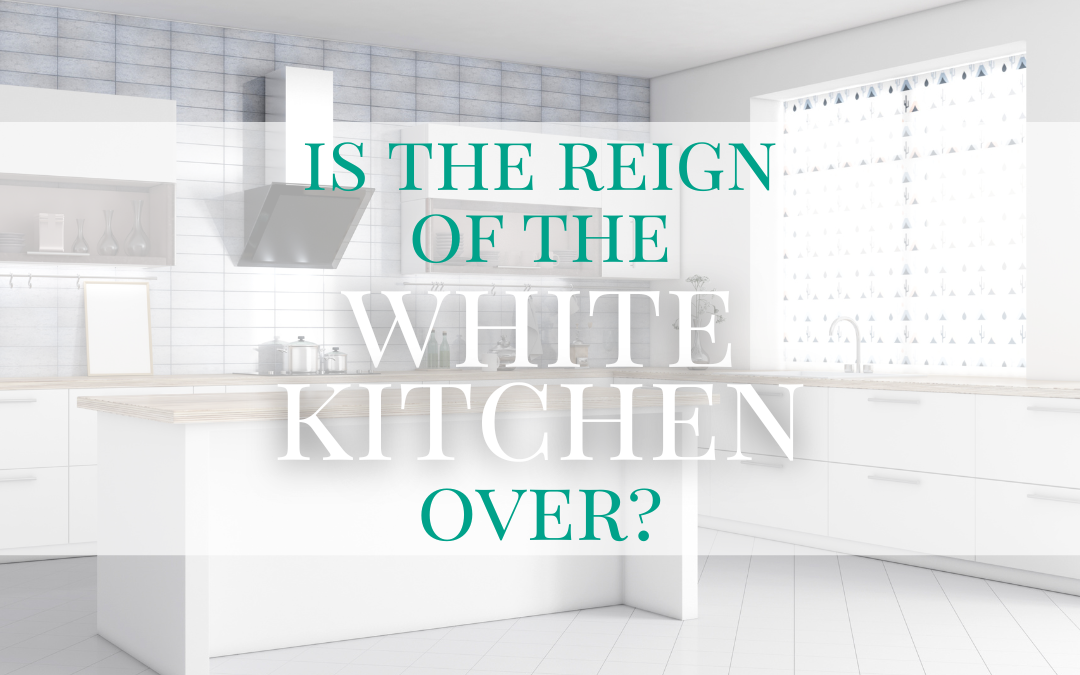
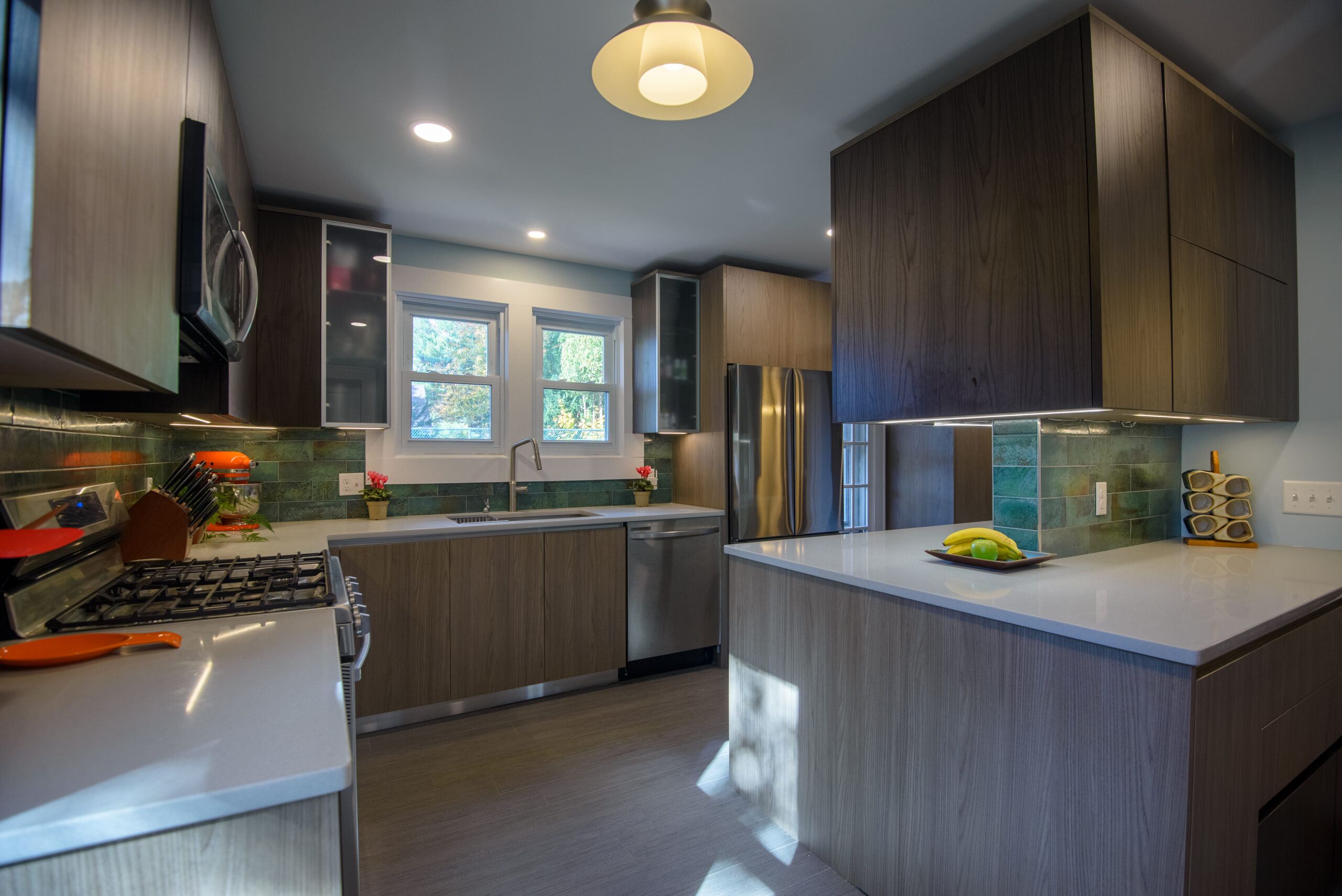
The all-white kitchen, once the hallmark of modern elegance, is beginning to feel dated (again). White-on-white minimalism is beginning to feel mundane & overused. Today, more of our kitchen designs embrace warmth, texture, and a more layered sense of luxury… even clients have had enough white and have asked us to use color in our designs.
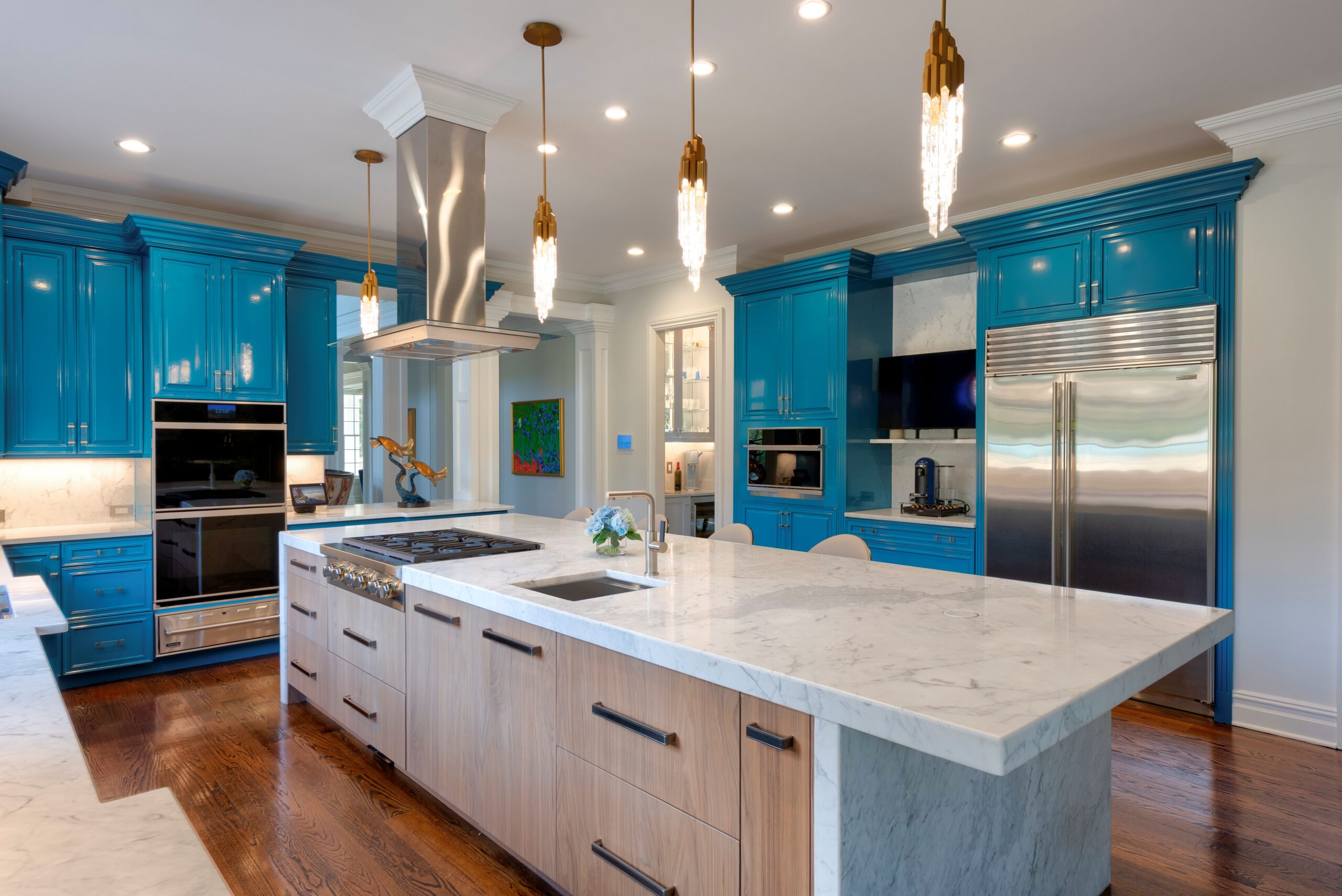
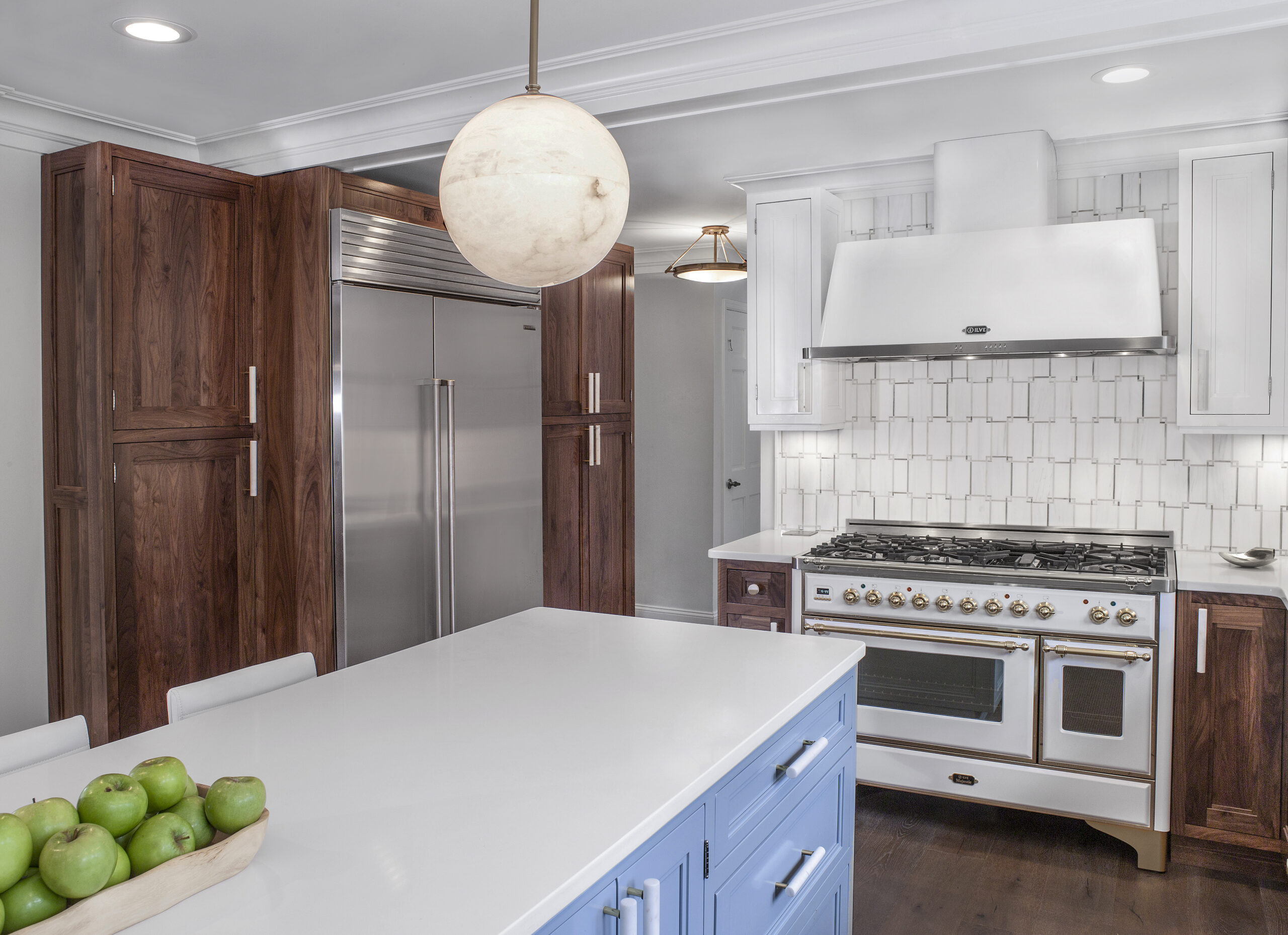
Interestingly, the “all-white kitchen” actually has a much deeper history than the recent minimalist trend—it cycles in and out of fashion for very specific cultural reasons.
Late 19th- Early 20th Century: White = Hygiene and Modernity
The earliest white kitchens date back to the late 1800s, when germ theory became widely accepted. Before that, kitchens were often dark, sooty, and purely utilitarian. As people began to understand bacteria and sanitation, white surfaces became desirable because they visibly showed dirt. Cleanliness wasn’t just practical; it became moral and aspirational. Hospitals were a big influence here with their white tile walls, enamel surfaces, and minimal ornamentation.
1920s–1930s: The Efficiency Movement
White cabinetry and surfaces reinforced ideas of efficiency and functionality. At the same time, enamel-coated appliances (white stoves, sinks, iceboxes) became standard. White wasn’t just aesthetic—it was industrial and modern.
1940s–1950s: The Golden Age of the White Kitchen
Post-WWII America really cemented the white kitchen as the ideal. Suburban homes featured:
- White metal cabinets, White laminate countertops & White appliances symbolized cleanliness, Domestic order & a fresh, optimistic postwar lifestyle
- That said, the 1950s also introduced pastels (mint green, pink, butter yellow), so pure white began to soften.
1960s–1980s: The Backlash (Color + Wood)
White kitchens fell out of favor as people embraced wood cabinetry and Earth tones, especially Avocado green, harvest gold appliances
The shift reflected a broader cultural move toward warmth, nature, and informality—almost the exact same motivations driving today’s move away from all-white.
1990s–2010s: The Return of All-White
White came roaring back as open-concept homes needed bright, neutral, minimalistic kitchens emphasizing light & simplicity. By the 2010s, the all-white kitchen (white cabinets, subway tile, marble/quartz, stainless steel) became almost a default.
Today: Why It’s Fading Again
The current shift toward color, wood, and texture echoes earlier transitions: Desire for warmth and individuality using natural materials evidencing fatigue with “catalog-perfect” spaces. In other words, we’re not abandoning white—we’re rebalancing it, just like in previous cycles.
So the “end of the all-white kitchen” isn’t really an ending—it’s another turn in a long design cycle.

Call us with your questions (973-337-5011) or Email us at info@greenroseent.com —we love helping clients figure out the right next step.
Visit us online at www.GreenRoseEnt.com/portfolio to explore our recent work—including before & after videos of transformations we’re proud of.
Check out our Instagram page – @greenrose_design to see what we’ve been up to and get some insight on our design-build process!
Recent Comments